










Underfloor Heating General
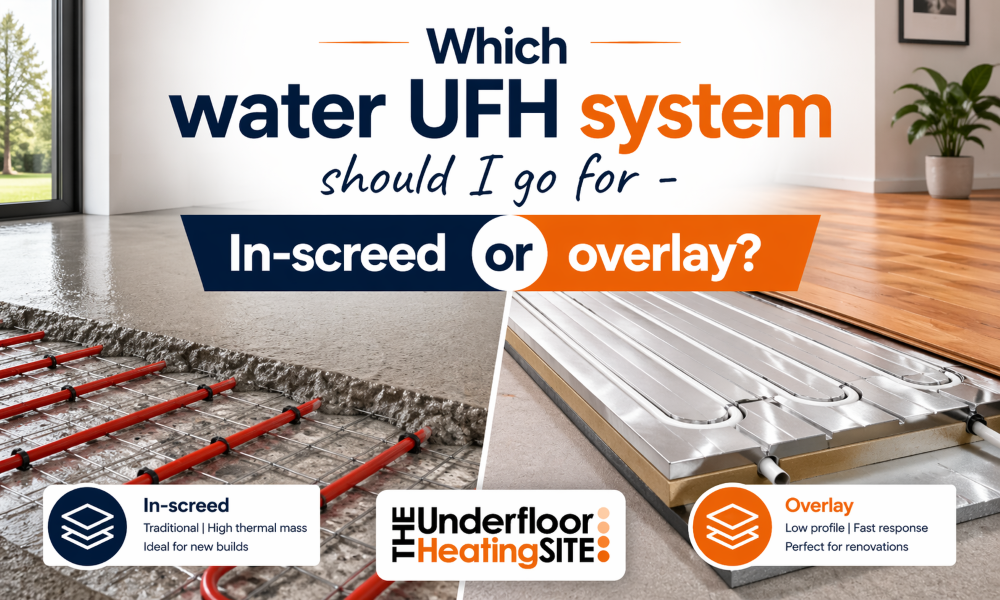
Which water UFH system should I go for – In-screed or overlay
21
Apr
Apr
Here’s a clear, practical comparison of screed (in-slab) UFH vs overlay (low-profile) water UFH—this is one of the biggest decisions in a renovation or new build.
🔥 Screed UFH vs Overlay UFH (simple view)
| Feature | Screed UFH | Overlay UFH |
|---|---|---|
| Installation | Pipes buried in concrete/screed | Boards/panels laid on top of floor |
| Best for | New builds / full refurb | Retrofits / minimal disruption |
| Heat-up time | Slow | Fast |
| Heat retention | Excellent (stores heat) | Low (cools quickly) |
| Floor height | Thick build-up (50–75mm+) | Thin (15–25mm typical) |
| Efficiency (esp. heat pumps) | Very good (low temps) | Slightly worse (higher temps) |
| Install time | Longer (drying/curing needed) | Quick (often days) |
🧱 Screed UFH (traditional “in-slab”)


6
What it is:
Pipes are embedded in a thick layer of screed (cement or liquid anhydrite).
👍 Pros
- Stable, even heat thanks to thermal mass
- Holds heat for hours after switching off
- Works at lower water temperatures (30–40°C) → ideal for heat pumps
- Generally most efficient long-term
👎 Cons
- Slow to respond (takes hours to heat up)
- Needs drying/curing time before flooring
- Raises floor height significantly
- More disruptive install
👉 Think of it like a storage heater: slow but very steady.
🪵 Overlay (low-profile) UFH


8
What it is:
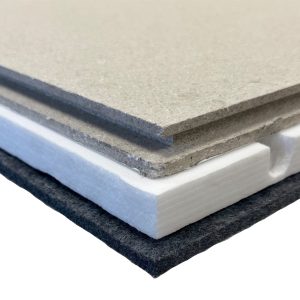
Pre-formed boards (often EPS or chipboard) sit on top of your existing floor, with pipes in grooves.
👍 Pros
- Fast response – heats up quickly
- Minimal floor build-up (great for retrofits)
- Quick install (no long drying times)
- Can often be used room-by-room
👎 Cons
- Doesn’t store heat (cools quickly)
- Often needs higher water temps (45–55°C)
- Slightly less efficient with heat pumps
- Can feel more like radiators (on/off cycling)
👉 Think of it like a radiator in the floor: quick but not “soak heat”.
⚖️ The real-world difference
1. Heat behaviour (most important)
- Screed = slow, constant, background heat
- Overlay = quick, responsive, on-demand heat
This is the biggest deciding factor.
2. How you live matters
- If you want heating on all day at a steady temp → screed wins
- If you want to turn rooms on/off quickly → overlay wins
3. Build context
- New build / extension: almost always screed
- Renovation / upstairs / low ceiling: overlay
4. Running costs
- Screed can be cheaper long-term, especially with heat pumps
- Overlay may cost slightly more to run due to higher temps
🧠 Quick recommendation
- Go screed UFH if:
- You’re building from scratch or doing major renovation
- You’re using a heat pump
- You want maximum efficiency + comfort
- Go overlay UFH if:
- You’re retrofitting into an existing house
- Floor height is tight
- You want faster responsiveness
🧾 Bottom line
There isn’t a “better” system universally:
- Screed = comfort + efficiency (but slow + disruptive)
- Overlay = convenience + speed (but less thermal performance)
